











 392
392
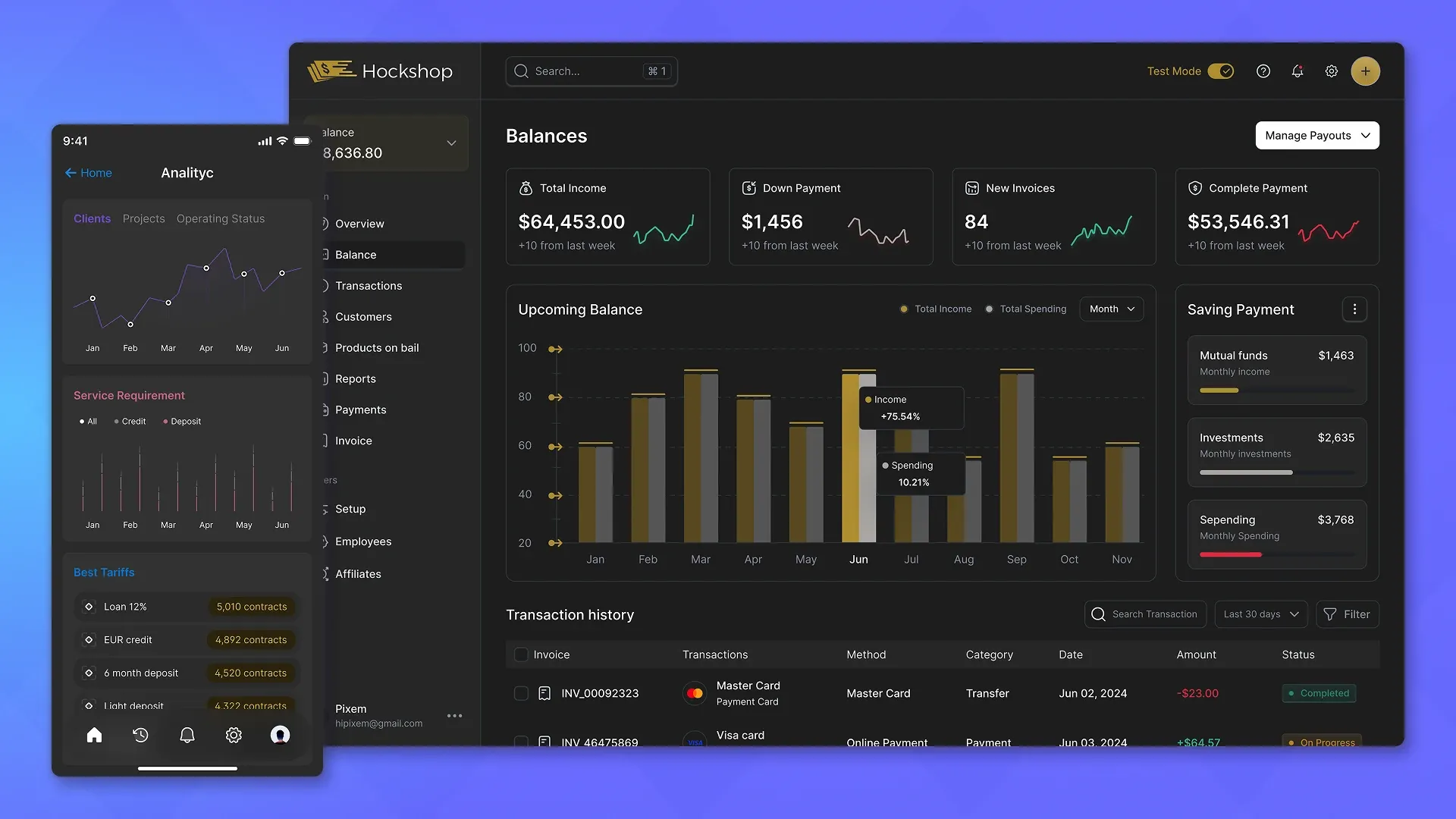
Today, businesses increasingly ask the question: which CRM system is better – off-the-shelf, SaaS, or custom-built? At the early stages, companies usually choose ready-made solutions, as they allow you to quickly launch sales and automate basic processes.
However, over time such systems start creating limitations: they impose their own logic, integrate poorly with internal services, and require ongoing subscription payments. As a result, the business adapts to the tool, rather than the other way around.
At AvadaCRM, we specialize in custom development of digital solutions: CRM, ERP, SaaS systems, websites, mobile applications, and bots. Our experience shows that custom CRMs for business become the foundation for automation, take into account the specifics of the company, and provide a strategic advantage.
In this article, based on our own expertise, we will analyze the key advantages of individually developed CRM systems compared to ready-made options.

Types of CRM Systems
To understand which CRM system is best for your business, let’s look at the main categories. All existing solutions can be roughly divided into two groups: ready-made and custom.
1. Ready-Made CRM Systems
This group includes:
- Boxed CRM: what it is
This is software installed on the company’s server or computer and runs locally. Usage often requires purchasing licenses and installing updates manually. This option provides full control over data and independence from the internet, but it also has limitations: high implementation cost, the need for administration, and difficulties with scaling. - Cloud CRM: what it is
A cloud-based or SaaS CRM is a service that operates over the internet, with all data stored on the provider’s servers. Users can access the system from anywhere in the world, and updates are carried out automatically. Payment is subscription-based, depending on the chosen plan and the number of users. This option is convenient for a quick start, but the business has to adapt to the available functionality and consider dependency on the provider’s pricing model.
2. Custom CRM
Developed from scratch or partly from pre-built modules, tailored to the specific business processes of a company. It scales flexibly, integrates with any services, and can be deployed on the company’s own servers or in a private cloud. Custom CRM development provides greater control over functionality and data, freeing the business from the limitations of ready-made solutions.

Key Advantages of a Custom-Built CRM System
1. CRM Aligned with Your Company’s Processes
In any ready-made CRM – whether boxed or SaaS – the business has to adapt to the predefined logic: standard sales pipelines, typical deal statuses, and limited document workflow scenarios. This may work for small companies with simple processes, but the more complex the business, the more noticeable the limitations become.
A custom CRM is built around your processes. It allows you to create unique sales funnels, set up flexible approval workflows, and integrate the system with rare or specialized services.
For example, for a company with a long sales cycle and multi-stage document management, custom CRM development makes it possible to have a system where every stage – from initial request to post-payment – is reflected within unified analytics. Managers no longer need to keep parallel records “in Excel on the side,” while executives gain a clear, transparent view of the entire business.
2. Scalability and Flexibility Without Limits
SaaS services often seem convenient at the beginning: you pay for a plan and quickly get ready-to-use functionality. But as soon as the business starts to grow, improvements become an issue – they are either unavailable altogether or come at a high cost and require lengthy negotiations with the provider.
A custom CRM scales together with your company. Adding new modules, implementing analytics, integrating AI tools, or connecting branches across different countries – all of this can be done within a single system, without the restrictions of an external platform.
3. Free Integration with Any Services
In boxed and SaaS CRMs, the list of integrations is limited: only those APIs provided by the developer. If you need a non-standard service or deep integration with an ERP, you often find that built-in tools are insufficient.
A custom CRM is open to any integrations. It can be connected to various ERPs, a corporate website, marketing platforms, Telegram bots, or warehouse systems. All tools operate as a single ecosystem – without manual data duplication or “patchwork” connections between programs.
4. Control Over Data and Security
In SaaS solutions, your client and deal data is stored on the provider’s servers. While convenient, this also carries risks: you depend on the provider’s security policies, restrictions, and even on how well they comply with data protection laws.
The advantage of a custom-developed CRM is full control over security parameters. The system can be deployed on the company’s own servers or in a private cloud, fully meeting security requirements. You decide where the data is stored and who has access to it.
With custom development, our specialists implement multi-level protection, including:
- SSL encryption for secure data transfer;
- two-factor authentication (2FA) to protect user accounts;
- role-based access control, so each employee only sees what they need;
- user activity logging to track suspicious actions;
- regular audits and backups to minimize risks and enable fast system recovery.
Additionally, custom development makes it possible to comply with GDPR, Ukrainian personal data laws, and other local regulations. This is especially important for companies working with international clients or government contracts.
5. Transparent Costs and No Subscription
The SaaS model looks affordable at first: you pay a monthly fee. But over time, expenses grow – you add new employees, upgrade your plan, connect extra modules. Eventually, the total cost of ownership becomes higher than expected.
A custom CRM eliminates “subscription dependency.” You invest in one-time development, and then pay only for support and upgrades when they are truly needed. The financial model is transparent and predictable: no hidden charges or constant “extra fees” for team expansion.

6. Full Analytics and Real-Time KPIs
Ready-made boxed CRMs are usually limited to a set of standard reports: number of deals, total revenue, manager performance. But as soon as a business needs a specific metric – for example, average time between deal stages, cost per lead depending on the channel, or combined efficiency metrics for a department – the built-in tools may fall short.
A custom CRM builds analytics around your tasks. The system allows you to:
- track key metrics in real time;
- clearly visualize data for different departments;
- connect forecasting and AI models to assess future sales;
- get top-down analytics – from the overall picture to individual manager performance.
The result: management gets a transparent system for measuring efficiency, while managers receive clear benchmarks to guide their work.
7. Automation Tailored to Industry and Business Specifics
Ready-made CRMs are marketed as universal solutions, but universality often turns into limitations. In healthcare, construction, logistics, or finance, standard scenarios simply don’t work: special processes, documents, and rules are required.
A custom CRM takes into account the specifics of your industry. This way, the system can embed business logic that directly matches your tasks:
- automatic generation of medical reports, contracts, or certificates;
- support for multi-stage tender processes in construction and public procurement;
- control of licenses and regulatory documentation in finance;
- specialized reporting according to the standards of a particular industry.
The result: the CRM becomes not just a client management tool, but a full-fledged business automation platform tailored to a specific field.
Examples of industry-specific CRMs developed by our company:
When Does Custom CRM Development Become Essential?
A custom CRM system is not always the only or universal choice. But there are situations when full-cycle CRM development becomes the optimal solution:
- You have complex processes that boxed CRMs don’t support.
For example: multi-level document workflows, specific sales pipelines, or unique customer service scenarios. - You need integrations with ERP, e-commerce, or Telegram bots.
If your business already uses multiple systems and they need to be combined into a single ecosystem, ready-made CRMs will limit your possibilities. - Full control over data and security is critical.
For companies in finance, healthcare, or those working with customers’ personal data, it’s essential to store everything on their own servers and comply with local legislation. - Your SaaS subscription costs have become comparable to development.
As your team grows and subscription fees double or triple, it becomes more logical to invest in your own system, which will cost less in the long run.
Our Experience: CRM Development for Different Businesses
Custom CRM MyHouse24
One of the most notable examples is the MyHouse24 project for property management companies and HOAs: a unified platform with a CRM for managing cash registers, personal accounts, and apartments; a resident’s personal account with online payments and service requests; plus an admin panel for configuring rates and handling communication.
Advantages of CRM implementation in this case:
- reduced time for processing payments and controlling debts;
- improved transparency of financial operations;
- automatic generation of receipts;
- integration of meter readings;
- better communication with residents through personal accounts and notifications;
- scalability for new buildings and companies.
Custom CRM for Egmont Aviation
CRM for Egmont Aviation (Slovenia) – the official distributor of Diamond Aircraft and JMB Aircraft, as well as the owner of a certified flight school. CRM system: development and implementation for Egmont Aviation covered the company’s key areas – aircraft sales, flight school operations, document management, and analytics.
Advantages of custom CRM development in this case:
- precise segmentation of clients into aircraft buyers and flight school students with different workflows;
- integration with messengers (Telegram, WhatsApp, Instagram, Facebook) and email campaigns in a unified chat module;
- automated document management: contracts, invoices, payment reminders, and debt control;
- analytics of lead generation channels and real-time financial reporting;
- flexible employee role settings and task management through calendars, tags, and workflows.
The result: Egmont Aviation received a CRM that covers all business areas – from aircraft sales to managing the educational process at the flight school. The system increased process transparency, accelerated lead processing, improved customer service quality, and enabled management to make data-driven decisions.
We design and implement CRM systems for companies across various industries: from e-commerce and logistics to education and finance.
And these are just a few examples of how custom-developed CRMs help businesses automate processes, accelerate sales, and strengthen data control. You can explore more of our completed projects in our portfolio and learn about the CRM systems we have built for different businesses.

Conclusion
The advantages of implementing a custom-developed CRM system are clear: the company gets a tool that adapts to its processes, scales without limits, easily integrates with any services, and ensures full control over data. Unlike boxed and SaaS solutions, a custom CRM takes into account the specifics of the business and industry, meaning it becomes not just a client management platform, but a complete ecosystem for managing sales, marketing, and operations.
That is why more and more companies are choosing custom CRM development – not to settle for the limitations of ready-made solutions, but to build a system that drives growth and efficiency.
If you are considering implementing a CRM, the AvadaCRM team will help you design a tailored solution that matches your processes and goals. Contact us to discuss your project and get a personalized consultation.


FAQ
-
Can data be transferred from an old CRM to a new custom system?
Yes. During implementation, we migrate data such as clients, deals, documents, and communication history. This ensures continuity and allows work to proceed without losing information.
-
How long does it take to develop a custom CRM system?
Timelines depend on project complexity. Basic functionality (sales pipelines, contacts, tasks, integrations with messengers) can be delivered in 3-4 months. More complex projects with unique modules, analytics, and ERP integration may take 6-12 months.
-
Is a custom CRM suitable for small companies and startups?
Yes, but it is most relevant for businesses with growth ambitions or specific processes. Startups can begin with SaaS, and later switch to a custom solution once the limitations become too restrictive.
-
Can a CRM be integrated with artificial intelligence?
Yes, it can. Custom development allows for AI modules such as sales forecasting, chatbots for lead processing, recommendation systems for clients, and automatic categorization of requests. You can learn more in our article about artificial intelligence in CRM systems.
-
Can the CRM be accessed via a mobile application?
Yes, a custom CRM can include a mobile version or a full-featured application with data synchronization. This is especially important for field employees and companies with distributed teams.
-
What kind of support is available after CRM implementation?
Typically, technical support, updates, and the option to develop new features are provided. Unlike SaaS, the company itself decides which improvements to implement and when.

