











 598
598
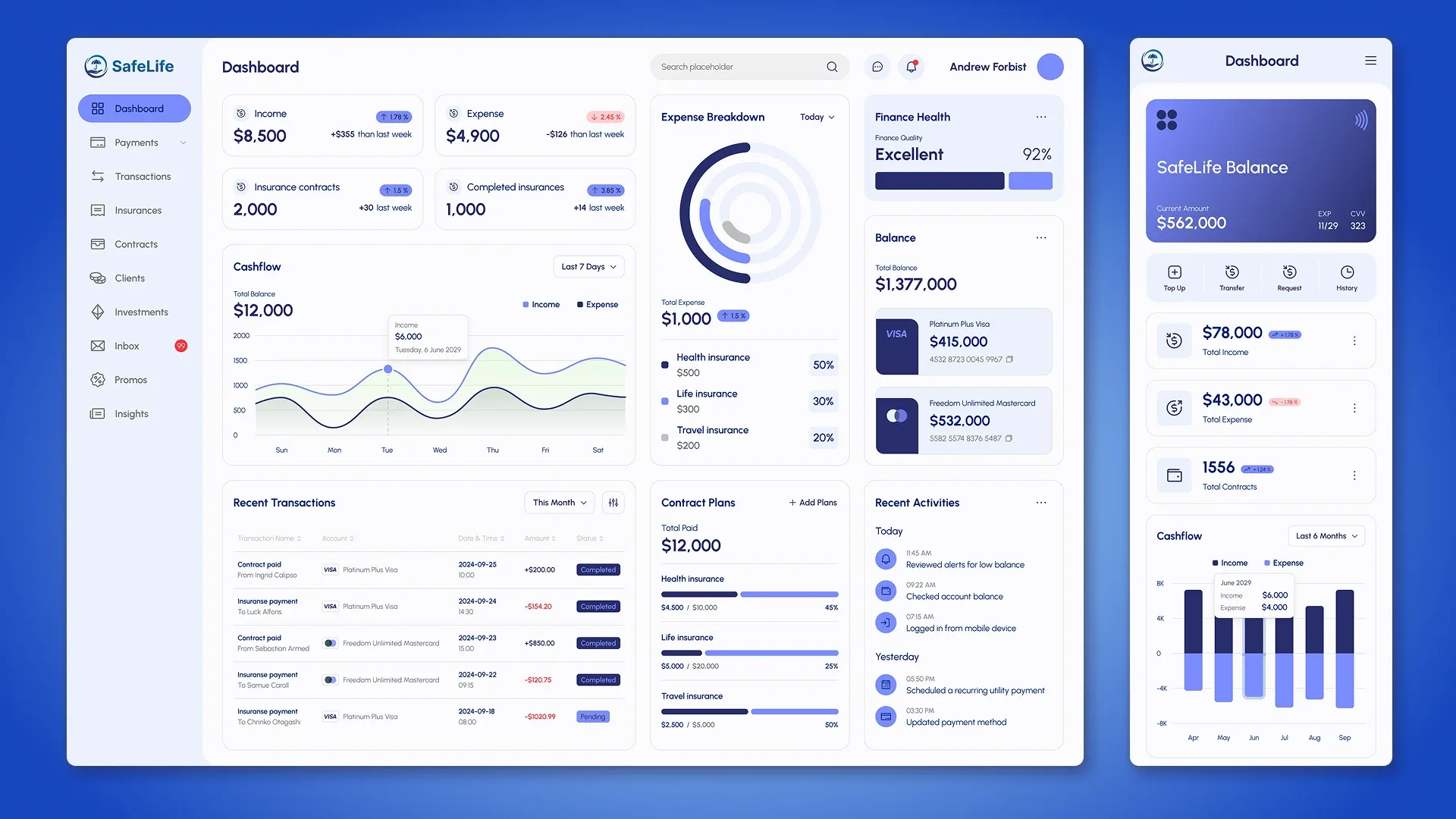
Every dollar invested in a customer relationship management (CRM) system can generate up to nine dollars in return.
However, this is true only if CRM is integrated and adapted to the requirements and characteristics of a particular business, which is not always the case: more than 70% of CRM implementations fail.
The main reasons for failures are the desire to save money and the wrong approach to development.
The desire to save is manifested in the fact that entrepreneurs often choose ready-made products instead of creating a unique software solution that takes into account all the features and needs of a particular business and its target audience.
The main disadvantages of off-the-shelf solutions are their limited integration and many unnecessary functions. Ready-made CRM systems created for mass consumption can only be integrated into a business superficially, while a unique software solution takes into account all the features of a particular business and its target audience.

Step 1: Select Type, Roles, and Platforms
Before you start building CRM from scratch, you need to answer a few important questions. This will help determine the scope and select the right set of features for the final product.
Types of CRM systems
- Operational
A CRM system differs from other types in that it aims to streamline and automate sales, customer service, and marketing processes. Such software is ideal for companies that interact with their customers through various channels such as call centers, blogs, websites, communities, direct mail and direct sales.
Operational CRM applications are built around phone conversations and correspondence between your team and clients. CRM-systems are a complex solution that has a number of important characteristics.
One of these characteristics is the presence of a single database of clients, which allows employees to quickly and conveniently access all the necessary information about all interactions with each client, both past and planned.
- Analytical
CRM-system is a tool for collecting information from various sources of interaction with the client and its subsequent processing. The main purpose of such a system is to help in daily operational work with clients and create an analytical base for planning and developing interaction scenarios with them.
The operational CRM system is focused on optimizing and automating sales, customer service and marketing processes. It is especially useful for businesses that interact with customers through various communication channels such as call centers, blogs, websites, communities, email, and direct sales. Some CMR applications can translate marketing data into concrete actions.


Roles in CRM systems
When a user is added to the CRM system, they are assigned a specific role, such as a salesperson, manager, manager, or manager. Each role has a specific set of rights and functionality required to perform tasks.
When developing a CRM system, it is important to provide templates for typical roles, such as "Owner", "Storeman", "Manager 1", "Manager 2", "Full access", "Advanced access", etc. and give the ability to create and set up roles. Access to create accounts with different roles should depend on the user's access level. For example, a "Senior Manager" can create accounts with the "Manager" role, but cannot add another "Senior Manager" or "Owner" to the system.
Supported Platforms
Mobile CRM applications have a number of advantages:
- More accurate data.
- Great efficiency.
- Greater acceptance.
- The best service.
Step 2: Decide on CRM features
According to Software Advice reports, when building a CRM system, contact management, customer interaction tracking, and scheduling are must-have features. However, other features are considered optional and can be customized based on company needs.
The choice of functionality of the CRM-system depends on the tasks. However, as a rule, the choice is determined by the size of the business:
- For private entrepreneurs, a customer database is usually enough to manage and track relationships with them.
- Small businesses need sales force automation to control and track the activities of individual sales reps.
- Medium-sized companies value sales and marketing automation, as well as analytics that help predict business processes and create marketing strategies
- Large companies need full-fledged combined CRM systems that allow them to manage everything from sales to strategy.

Step 3: Calculate the development budget
There are many factors that affect the cost and development time of CRM applications.
The main ones are listed below:
- Number of features. Each function implemented in the program code requires a certain number of man-hours. Therefore, the more functions in a CRM system, the higher the cost and time of its development.
- Number of roles (types of access). Roles in the CRM system determine the access of each user to certain functions.
- Platform support. If you need to support multiple platforms, such as web and mobile applications, this also increases the cost and time of developing a CRM system.
- Method of entering information. Automated information entry requires additional time for implementation, and therefore increases the cost of developing a CRM system.
- Events and tasks. Each element in a CRM system, such as notes, tags, and attributes, can be implemented with varying degrees of complexity, which also affects development cost and time.
- Sales funnel. Implementing a sales funnel can be simple or complex, depending on how automated the business logic needs to be.
- Interaction reports. Additional reporting features, such as lead scoring and social media interaction data collection, can increase the cost and time of developing a CRM system.
- Integration with other services. The cost and time of developing a CRM system also depend on the complexity of integration with other services.
To estimate the cost of developing a CRM system in your country, you should take into account the time required for development and the average cost per hour of a programmer in your country.

Step 4: Find a technical contractor
Using outsourcing solutions is an excellent choice if you need a customized solution with quality assurance at a reasonable price. To do this, you can hire a development company that will prepare the project, develop the software, implement it in the business, and train the staff.
If the company has its own team of programmers, then you can use its skills and experience to create a CRM product.
In the absence of such a team, it can be created, but this can be a time-consuming and expensive process, but it will allow you to fully control the development process.
Open-source software (OSS) is a kind of in-house development that involves using open source software to create your own CRM system. This makes it possible to reduce costs and speed up the development process.
Step 5: Staff training
If the developer of the CRM application and the user are different people, then it is necessary to provide staff training so that they can work with the software product.
It is better to start training early, before the system is deployed, so that the staff quickly gets comfortable and knows what to do.
There are two ways to do this:
- Select a few employees (depending on the size of the company) who will start learning the system in the last stages of development, when most decisions about use cases have already been made. When they get comfortable, you can organize several courses and write instructions for each element of the program.
- Arrange with the development company to write training materials and conduct staff training. This option will cost a little more, but will not require employees to be distracted from their main tasks.


Step 6: Service Desk and Improvement
Most often, problems with bugs, glitches and design errors occur during the preliminary testing stage. However, some mistakes, even experienced programmers and designers, go unnoticed. Even giant companies such as Intel, IBM, Microsoft and Apple cannot guarantee 100% performance of their products.
FaceTime found a bug that allows you to listen to other people's conversations. Correction of possible problems with the finished software is carried out by the support service, which can be organized in various ways:
- Calling a specialist (Call out) by phone, e-mail or messenger, who comes to the place and fixes the problem, receiving payment for the work.
- Providing technical support for a specific period (week, month, year) using block hours (Block hours).
- Assistance within a certain list of services (Managed services), for example, consultations by phone or call to the place.
- Search for a solution using discussion forums on the Internet (Crowdsourced), where problems are discussed and solutions are proposed.
If an internal help desk is used to troubleshoot problems with an application, then it can also be used to collect feedback on the performance and usability of the application. This data will help optimize and improve the CRM system. If the support is external, you need to collect feedback yourself.
Development of a CRM system from scratch in AvadaCRM
AvadaCRM specializes in the development of CRM systems for small and medium businesses. The implementation of a personalized CRM system can significantly increase a company's productivity and automate many business processes.
To implement such projects, we use only innovative technologies, and also represent already formed teams of specialists with experience in working together. This allows us to guarantee the high quality of the result, regardless of the complexity of the task.


FAQ
-
What basic CRM functionality should be built right away so that the system does not require rework after launch?
At the planning stage, it is important to provide for centralized contact and lead management, a complete history of interactions with customers, analytics of key indicators, automation of typical business processes, and integration with other services – mail, telephony, website, payment systems, etc. Such a foundation allows CRM to scale with the business and reduces the risk of expensive improvements in the future.
-
Do I need to immediately think about integration with all the services that I plan to use?
Yes, integrations can significantly increase the efficiency and accuracy of data in CRM. It is worth determining in advance the key systems with which the new CRM should work (ERP, website, messengers, telephony, financial services) so that the project is complete and does not require large-scale rework later.
-
Can I develop CRM for different devices (computer, smartphone) at once?
Yes, modern solutions can be adapted for web and mobile devices at once. This allows managers to work effectively from anywhere, increases flexibility of use and does not require separate tools for different formats.
-
What are the risks associated with the fact that I do not use CRM, but only spreadsheets or documents?
In this case, the company risks encountering errors in data processing, duplication of information, lack of a single source of truth, incoherence of actions and delays in communication with customers. CRM allows you to centralize data and processes, which significantly increases productivity and quality of service.
-
How long can it take to develop a CRM system for my business?
The term depends on the scale of functionality, integrations and number of users - from the beginning of planning to the finished product it can be from several weeks to several months. The real project schedule is determined based on the technical specifications and your business goals.
-
What business indicators can improve after implementing custom CRM?
By automating processes, centralizing data, and integrating CRM, it can help increase team productivity, improve customer experience, reduce request processing time, increase lead conversion, and increase overall business revenue.

