











 320
320
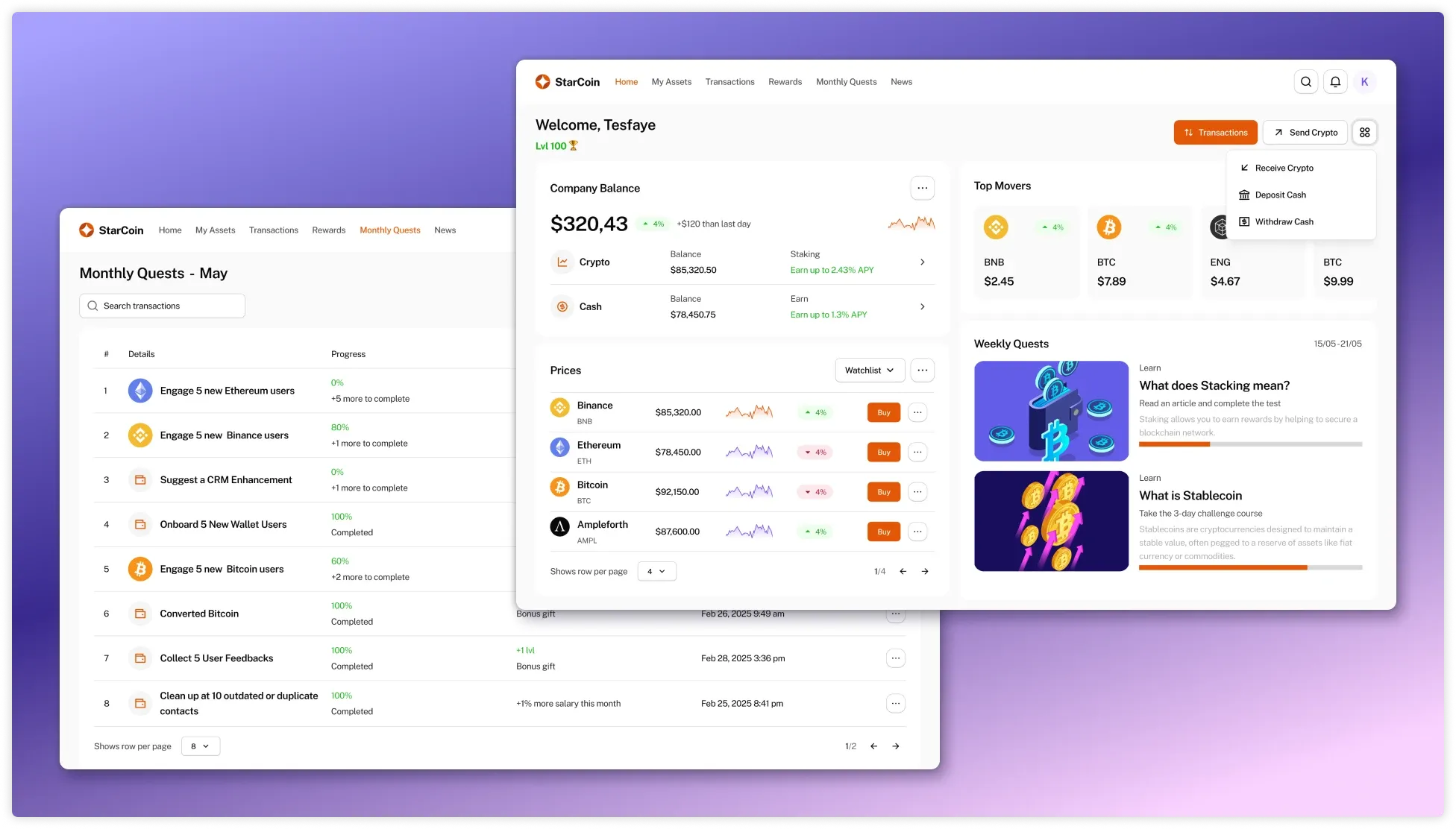
In the world of digital transformation and innovative solutions, one of the most promising approaches is gamification in non-game contexts, namely, the integration of game mechanics into CRM systems. This concept not only improves employee engagement, but also increases the efficiency of the entire team. In this article, we'll look at what CRM gamification means, its key principles and success stories, methods for improving CRM performance through game-based scenarios, and tools to help implement this approach in your business.

Gamification principles and their application in CRM
CRM gamification is the process of introducing game mechanics into the management system. The purpose of this approach is to make working with CRM more interesting and exciting, encouraging employees to achieve better results.
The basic principles of gamification include:
- clearly defined goals that employees must achieve, and tasks that help to move towards these goals;
- use of game scenarios to simplify complex tasks;
- constant feedback on achievements and progress;
- reward systems that encourage employees to strive for better results;
- the opportunity to collaborate with colleagues, share experience and compete in a healthy competition format.
All this allows not only to increase the interest of employees in performing their duties, but also to improve the quality of work with customers.
Benefits of Gamification in CRM
CRM gamification provides a number of benefits for companies of different types and scales of activity.
- Increased motivation.
Game elements make the processes more interesting and exciting. Employees are actively involved in work and strive to achieve the best results.
- Increase productivity.
Thanks to game elements, the processes become more structured and understandable. Gamification helps to increase employee engagement in work and in the company as a whole. Your team will work more efficiently and cohesively.
- Improve customer experience.
A motivated team serves customers better, increasing customer loyalty.
- Performance analysis.
Gamification makes it easy to track the progress of individuals and teams.

- Fast learning.
A game-based approach to learning speeds up and makes it easier for employees to learn new skills and processes.
- Increase in sales.
The company's sales and revenues are growing by encouraging employees to sell more actively through gamification.
According to research, 85% of workers show a greater interest in working in the context of gamification of their workflow. Platforms that integrate game mechanics contribute to improving team engagement and overall productivity. Moreover, more than half of the modern workforce is millennials, who are naturally adapted to game formats due to the development of the digital age.
The main gamification techniques used in CRM
The most common gamification techniques in CRM include:
- awards for achievements, timely and high-quality work;
- "challenges" or special tasks with a limited time to complete;
- rating system, where employees can see their achievements relative to colleagues;
- short-term game scenarios for performing certain tasks;
- the mechanics of progress, that is, the use of levels or statuses that stimulate employees to develop;
- the opportunity to communicate with colleagues, share achievements and exchange experiences.
Examples of game elements that can be integrated into the CRM:
- accumulation of points for each action performed – replying to an email, closing a deal;
- badges for achieving certain results – for example, "Sales Wizard";
- certificates for completing tasks, such as Best Seller of the Month
- leaderboards, where employees can see their place in the overall ranking and compete with colleagues;
- quests – something like "Sales Week", as an opportunity to get additional points and prizes;
- levels that employees move through, unlocking new opportunities and rewards.

Gamification implementation in CRM
Gamification integration into CRM involves several sequential steps.
1. Analysis of needs and definition of goals
It all starts with identifying the problems you want to solve with gamification: weak employee motivation, low sales, or insufficient customer engagement. Based on needs, specific KPIs are set that can be tracked, such as increasing the number of completed tasks, increasing sales by a certain percentage, increasing customer satisfaction, or reducing customer processing time. KPIs are visualized in an easy-to-understand format using dashboards.
Also, before implementing gamification in CRM, the effectiveness of the existing management system is assessed to identify problem areas that need improvement.
2. Game concept development
First, you need to determine which theme will be closer to your company and employees – sports, space, or adventure. The next step is to select the game elements that we talked about earlier (points, levels, badges, leaders, quests). When the design of game mechanics in CRM is ready, the development of an interesting plot begins with the involvement of game elements that will motivate employees to achieve goals.
3. Selection of tools, development and integration into CRM
First, specialists choose the appropriate tools or platforms for gamification that integrate with your CRM system. Next, there is the direct development of gamification in CRM: setting up the conditions and rules for awarding points, obtaining achievements, and other game elements. After that, the system is tested on a small group of employees before the full launch.
4. Launch and presentation
At this stage, employees are familiarized with the rules of the game and motivated to participate. It is very important to demonstrate examples of successful use of gamification so that employees understand why they need it. Also, trainings are mandatory – the team must clearly understand the principles of the new system.
5. Monitoring and adaptation
A gamified management system requires constant monitoring of results using CRM analytics. Based on feedback from employees and the results of the system implementation, the developers improve it.
6. Support and improvement
Gamified CRM requires systematic updates of game elements and rules to keep employees engaged. It may also be necessary to make changes to the gamification system in accordance with changes in the business.

CRM gamification tools
There are several tools and platforms on the market that will help you implement gamification in your CRM. The most popular solutions are:
- Spinify is a tool for creating leaderboards and tracking progress.
- Ambition – To create competitions between teams.
- Bunchball Nitro is one of the most popular platforms for implementing gamification elements in business processes, offering a wide range of game mechanics for CRM.
CRM gamification tools should match your business processes, integrate seamlessly with existing systems, and be able to scale and adapt.
Examples of successful gamification in CRM
If earlier CRM systems were just databases, today they are becoming full-fledged playgrounds for employees. Even large international companies are using games with might and main: warehouses turn into mini-championships, and testers receive points for each error found. As practice shows, it works. Gamification has become a powerful tool for increasing employee engagement and productivity. Companies use it to motivate staff and develop skills.
For example, as part of incentive programs for active participation in corporate life, employees can receive bonuses or internal currency. Bonuses can be exchanged for valuable prizes – for example, season tickets or branded gifts, and you can buy snacks and drinks for internal currency. For mastering new skills, coins are awarded, which then turn into weekends or new impressions.
Examples of successful gamification in CRM in recruiting
Gamification is becoming a popular tool in recruiting, allowing not only to search for talents, but also to test their skills in a non-standard way: some catch virtual characters, others build their own hotel in a simulator, and still others are creative to the fullest to get into the dream team. This turns the work routine into an interesting process and brings real results. Gamification is transforming recruiting, making it interactive, creative, and engaging for today's candidates.
How Gamification Helps Increase Employee Productivity and Motivation
Gamification has a positive effect on employee productivity for several reasons:
- feedback in the form of awards and recognition increases self-confidence and motivation;
- positive perception of tasks, interest and enthusiasm in the implementation of goals are formed due to levels and progressive challenges;
- visualization of achievements allows employees to see their progress and strive for new goals;
- short-term goals stimulate regular activity;
- healthy competition forms a competitive spirit and motivates you to strive for the best results.

Methods for Improving CRM Efficiency Using Game Mechanics
Game mechanics can be implemented into the management system in various ways, which allows you to adapt them to the needs of a particular business. CRM gamification can stimulate team efficiency improvements, for example, by taking the following actions:
- daily challenges that support productivity and reduce employee procrastination;
- team competitions and joint tasks to achieve big goals;
- implementation of personalized awards that correspond to the interests of employees;
- constant monitoring of progress and support of employees in achieving results;
- creation of an individual game profile for each employee;
- regular updates of game mechanics to maintain the interest of employees;
- creating opportunities for interaction – communication and exchange of experience or achievements between employees;
- the introduction of a virtual currency that employees can spend on various bonuses;
- visualization of each employee's progress towards achieving the goal with the help of a progress bar;
- the distribution of staff by level according to their achievements;
- creating special tasks and missions to increase the difficulty of the game.
P. S. Gamification is a powerful tool that can turn work into an exciting game. It helps to increase employee motivation, productivity, and satisfaction. This approach not only simplifies routine tasks, but also creates a friendly atmosphere of healthy competition. The key is to find a balance between play and work, because this is the secret to successful gamification. If you want to implement gamification into your CRM system and increase team engagement and motivation, contact AvadaCRM – we will help you integrate effective game mechanics that will contribute to the growth of your business.


FAQ
-
Which business industries can use CRM gamification?
Gamification is suitable for a variety of industries. It is most commonly used in sales, marketing, customer service, recruiting, training, and IT.
-
What business tasks does gamification solve in CRM?
Gamification helps to increase sales efficiency, motivate employees to meet KPIs, improve teamwork, reduce staff turnover, and improve the quality of customer service.
-
Is gamification good for small businesses?
Yes, even for small teams, gamification can be a powerful tool. It promotes healthy competition and improves the work environment, which helps to achieve goals faster.
-
Is it possible to gamify any task?
No, not every task can be gamified. For successful gamification, it is important to clearly define the goal and be able to measure the results.
-
How to use gamification elements in CRM?
It is important that the elements of gamification are relevant to the goals of gamification, the specifics of work, and the interests of employees. For example, elements of popular video games can be used for a young audience, and classic games can be used for the older generation.
-
Can gamified systems replace traditional methods of motivation?
Gamification is not a substitute for traditional methods such as bonuses or corporate culture. It is an addition that increases motivation and interest.
-
What are the risks associated with gamification?
The main risks are the overload of employees due to excessive competition, the possibility of a decrease in the quality of work in pursuit of points, or, conversely, indifference to the system if its mechanics are boring or complex. To prevent this from happening, contact experienced specialists who know all the intricacies of such integrations. Also, do not forget to systematically analyze the effectiveness of gamification implementation in CRM.
-
Is it possible to use gamification in customer management?
Yes, and it can significantly improve customer engagement, drive conversions, and increase satisfaction and loyalty. It helps to create an emotional connection with the brand and turn every interaction into an interesting and useful event for the customer.

