








CRM development
Expertises
CRM for a real estate agency

CRM for hotels and motels

CRM for eCommerce



CRM for restaurants and cafes



CRM for the beauty industry
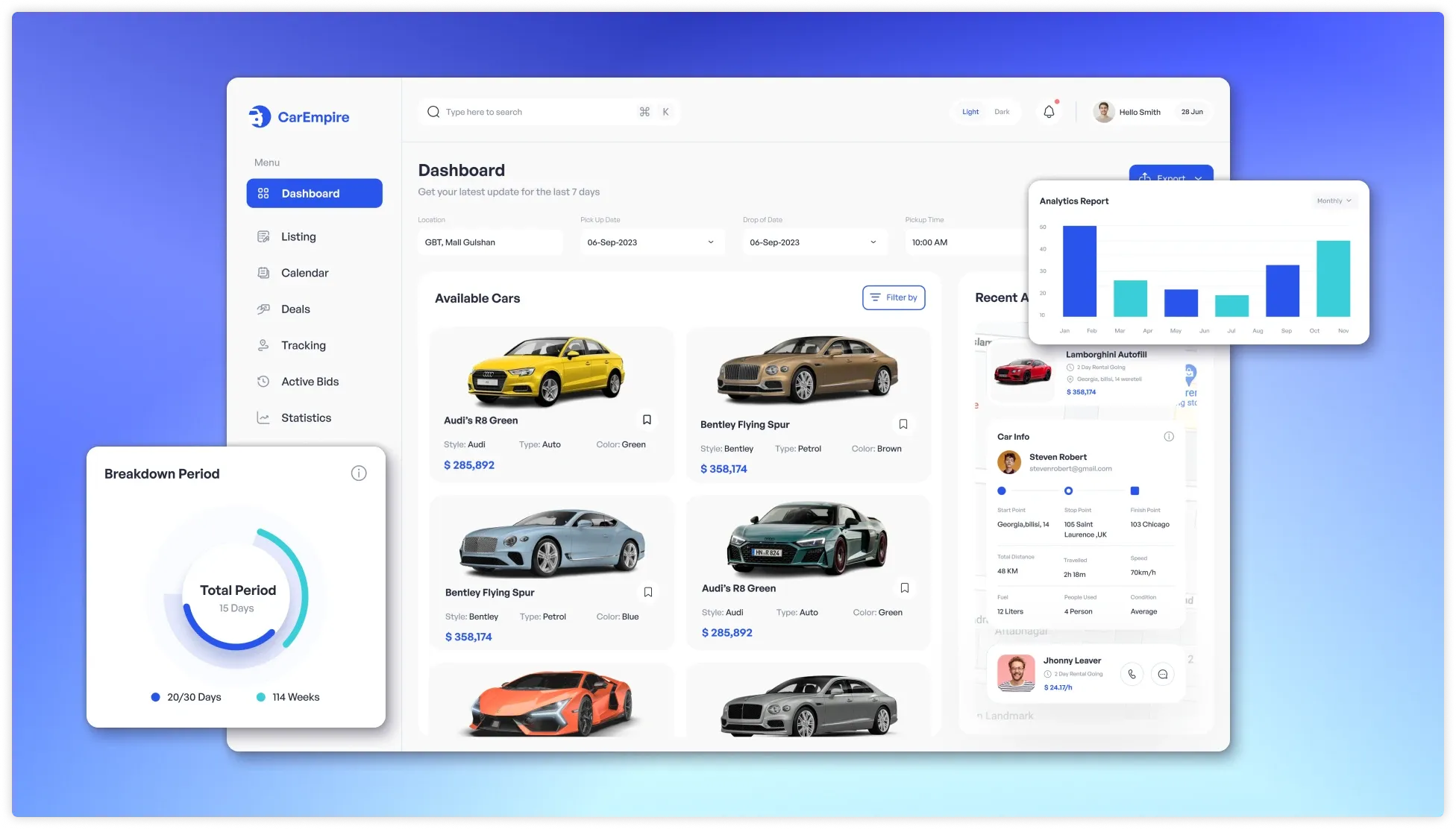
CRM for rental business
CRM for medical centers and clinics


CRM for IT companies and SEO agencies
CRM for a marketplace
CRM for taxi service

CRM for travel agency

CRM for dropshipping
CRM for marketing and advertising
CRM for delivery cars from the USA

CRM for call-center
CRM for manufacturing
CRM for microfinance organizations

CRM for delivery services
CRM for veterinary clinics
CRM for an insurance company
CRM for law firms and lawyers

CRM for car wash
CRM for agribusiness
CRM for car service

CRM for traffic arbitrage

CRM for car shop
CRM for car dealership
CRM for a construction company

CRM for cargo transportation
CRM for barbershops
CRM for a warehouse

CRM for beauty clinics

CRM for banks
CRM for transportation and logistics
CRM for accountants
CRM for fitness clubs and sports centers
CRM for maritime transport
Development of a custom CRM system for business
Managing a business is becoming increasingly challenging every year. The market is rapidly changing, competition is intensifying, and customers demand immediate attention. Without a reliable management system, it's difficult to expect stable growth, as today, it's not the largest businesses that survive, but those that adapt quickly. Therefore, developing and implementing CRM systems is not just a trend, but a necessity and a strategic advantage. Whatever your industry, if you strive to stay on top of innovation and stay current, now is the time to order CRM development for your business.
AvadaCRM is a reliable partner for those looking to take their business to the next level. Our team will develop a comprehensive intelligent tool that will help you build effective business processes, accelerate sales, analyze customer behavior, and optimize your entire team.

CRM for business – what is it?
A modern CRM system for business is a comprehensive platform that integrates all customer interaction channels and internal business processes into a single information space. Automation using a modern, customized management system will help you reduce costs, improve service, and scale your project without risk or stress. This tool allows you to monitor every step – from the first contact with a potential client to post-sales service – analyze data, and build long-term, profitable relationships.
Benefits of implementing a CRM system for business
Custom development of a custom CRM for your business provides a solid foundation for growth, increased profitability, and enhanced competitive advantages.
- Business process automation. Developing a CPM system eliminates the human factor from operational processes forever. No more forgotten tasks, late notifications, lost data, or missed clients. CRM records, reminds, and helps the team work as a single, well-coordinated organism.
- Increased efficiency. Automated workflows for processing customer data and requests, sales, production, and logistics save time, reduce costs, and increase team productivity. Everything important is under control, and everything routine and regular is automated.
- Transparent analytics and control. Our CRM software for business provides comprehensive information at any time in a convenient format: online dashboards display key metrics, department reports, sales funnel performance, and other indicators. With up-to-date data, you can make decisions not just intuitively, but more informed and faster.


- Optimization and standardization of processes. Implementing a CRM for business helps eliminate reckless maneuvers, unnecessary risks, and disparate data. All tasks, transactions, communications, and documents are generated according to a single standard. This helps eliminate errors, speeds up routine operations, and increases employee accountability. A business management system with a web interface, which ensures uniform work procedures, easily scales as the company grows.
- Improving Marketing Efficiency. Modern CRM for business is a tool for in-depth analysis, demand forecasting, and launching personalized marketing campaigns. CRM tools allow you to more accurately segment your audience to create customized customer interaction scenarios, increasing the likelihood of conversion and shortening the sales cycle. This increases the return on advertising investment.
- Improved service. CRM software personalizes your customer interactions: it tracks the entire interaction history from initial contact to repeat purchases, allowing you to respond more quickly to inquiries, anticipate needs, and send tailored offers at the right time. Satisfied customers return and bring in new ones, and your average order value increases.
- Save time and resources. Automating processes significantly reduces the workload on employees, freeing up their time for important strategic tasks. You can optimize headcount and reallocate resources while routine tasks (sending emails, setting tasks, calculating, etc.) are performed automatically in the CRM.
- Flexibility and scalability. A customized business automation system allows you to easily adapt to market changes without risk or compromise: add new departments, branches, products, and integrations. Growing order volumes, expanding your product range, and entering new markets - all this is possible thanks to the right architecture of a unique CRM.
- Data Security. When developing a custom CRM system for businesses of any size, sector, and scale, our developers ensure multi-layered data protection, including: SSL encryption for secure data transfer, two-factor authentication (2FA) for account protection, access rights management to ensure employees see only the data they need, user activity logging to identify suspicious activity, regular security audits, and data backup.
- Trust of partners and clients. For partners, investors, and clients, having an in-house business management system with advanced automation is an important indicator of a company's maturity. It demonstrates process transparency, operational stability, and readiness for scalability.
A business management system (CRM) is your command center, where every detail matters and the smooth operation of all departments becomes a reality through process automation.
Why do businesses need a CRM system?
Turnkey CRM implementation helps solve a number of problems critical to a company's growth, sustainability, and development.
- Centralizing processes and data. Developing a CRM system to automate your business is primarily necessary to create a unified digital space for seamless interaction with clients and employees. It consolidates all information about clients, transactions, orders, and communications, making it accessible to all authorized persons at any time.
- Sales automation. Developing CRM systems for businesses allows you to build a predictable, clear model for sales and customer service. Scripts, automatic notifications, and transaction stage monitoring all reduce risks and ensure a high level of service at every stage.
- Product, warehouse, and logistics management. Creating a CRM system means avoiding inventory shortages and excesses in warehouses and optimizing procurement. In particular, a CRM for a merchandise business is indispensable for tracking inventory, analyzing product turnover, and integrating with accounting systems.
- Increased conversion. Sales are boosted by tracking each lead, automated deal processing scripts, and a salesperson incentive system. With a customized CRM, business marketing becomes more effective: you can launch personalized campaigns and segment customers by behavior, interests, and interaction history.
- Effective team management. A CRM system for managers is a convenient tool for setting tasks, monitoring their progress, analyzing KPIs, and employee performance. This reduces the workload on middle managers and allows them to see the real picture.
- Increased competitiveness. Rapid response to market demands, precise customer service, and effective management of internal resources provide a significant advantage over competitors.
- Preparing for global digitalization. Custom CRM development is becoming the foundation for the future implementation of Big Data, machine learning, and business analytics technologies. Today, the entire world is rapidly digitalizing, and simply having a website or social media is no longer enough – everyone needs comprehensive business automation.
- Cost reduction. The transition from manual processes to digital technologies leads to cost reductions – for personnel, rent, paperwork, and infrastructure. The cost of developing a CRM system is significantly lower than all of these expenses.

What business needs automation?
Previously, only large corporations sought CPM, but today, competent process management is becoming critical for businesses of any size and sector.
- Small and medium-sized businesses often suffer from inefficient organization and a shortage of resources for routine tasks, resulting in lost requests, forgotten clients, and missed deadlines. CRM for small businesses radically changes the situation: it simplifies task management, tracks clients and transactions, generates reports, and organizes control. Automation allows small companies to operate at the level of large players and lays the foundation for scaling.
- Manufacturing companies require precise coordination across all stages, from order acceptance to product release. Automation is critical in every industry, from food processing to metallurgy. A customized CRM integrates production, warehousing, purchasing, and logistics into a single system, allowing for visibility into actual capacity utilization, accounting for product costs, and early detection of bottlenecks.
- A construction business needs a program that can manage multiple projects simultaneously, maintain estimates, track progress, and coordinate interactions with subcontractors. A CRM for construction companies helps automate cost calculations, plan work schedules, manage contracts, and record all project changes.
- Retail companies and online stores actively use CRM systems to manage inventory, orders, delivery, and customer feedback. Automation is especially important for online businesses related to marketplaces and dropshipping, where order processing speed and data accuracy directly impact seller ratings. A management system helps set up multi-channel sales, analyze customer behavior, and launch personalized marketing campaigns.
- Service companies, from medical centers to travel agencies, can significantly improve customer service and reduce operating costs through automation. A CRM system handles record creation, notification sending, communication history tracking, and feedback.
- Financial, consulting, and legal firms handle large volumes of client data and complex projects, requiring attention to every detail of interaction and ensuring reliable personal data protection. An automated management program for your business allows you to streamline document management, monitor task deadlines, manage contracts, and build strong, long-term client relationships.
- B2B companies, where transactions are often high-value and have long decision-making cycles, also require a CRM. A system for this type of business helps structure the sales process, build complex funnels, record all customer touchpoints, and ensure no detail is missed.
- The restaurant and hotel business requires efficient management of orders, table reservations, customer data, and feedback analysis. With a restaurant CRM, you can automate reservations, launch personalized promotions, consider customer preferences, and manage loyalty programs.
- IT companies and startups use CRM for project management, resource allocation, development time tracking, and client interactions. IT automation is especially necessary during periods of rapid growth, when teams expand, projects multiply, and centralized process management is required.
- Educational projects (private schools and online courses) can use CRM to automate student registration, payment, notifications, and engagement analytics. This allows them to focus more on the quality of instruction and student engagement.
- A furniture business can use a CRM to track orders for custom products and monitor their progress. The CRM program can also handle a variety of other custom functions, including project visualization, technical drawing storage, collaboration with designers, and precise delivery schedule planning.
- Logistics and transport companies, where clients consistently place high demands on service delivery times and quality, can use CRM to efficiently manage routes and fleets, track the location and status of vehicles, automate delivery cost calculations, and conveniently interact with clients.
- A flower business also needs automation: a CRM system allows you to track flower orders, monitor bouquet and gift delivery, offer related products, and maintain a customer database based on their preferences and purchase frequency. It can be integrated with holiday calendars for automatic reminders and marketing emails.
Regardless of your business sector or the specific nature of your processes, a customized CRM system will become a powerful driver of growth, precision, and efficiency for your company. Automation not only streamlines daily tasks but also opens up new horizons for development.


How CRM for business works
Creating a CRM system will help make your business manageable, transparent, and scalable, but it's important to understand that an effective CRM system isn't a one-size-fits-all solution. Each niche requires a unique set of features that takes into account the specifics of its operations, processes, and market requirements. Moreover, whether the CRM system is designed for Ukraine or Europe, it must ensure high efficiency and compliance with local legislation.
A modern CRM is more than just a customer database; it's a multi-layered system that integrates data, processes, and analytics. Its structure is built around several key modules, helping to create an effective management model tailored to the real-world needs of a small startup, a large company, or an international corporation.
- A unified database of clients, transactions, contacts, and interactions is the foundation of any CRM. The program doesn't just store information; it makes it easy to search, segment, and use. Everything is accessible in just a few clicks - from a detailed client profile to a complete history of interactions with them.
- The sales management module helps build logical funnels, track deal stages, analyze conversions, and forecast revenue. Employees see a clear picture of each client, and managers can evaluate team performance.
- The process automation module is responsible for executing recurring tasks. It allows you to set up lead processing scenarios, automatically send emails and messages, issue task reminders, and generate reports. Thanks to CRM, your business operates like a well-oiled machine, minimizing the risk of human error.
- The analytics and reporting module transforms data into valuable insights. Visual dashboards and KPI reports provide management with an objective picture of key business metrics: revenue, customer activity, marketing effectiveness, and employee performance.
- Integration with external services (email, telephony and messaging, payment systems and marketplaces, accounting software) is an integral part of modern CRM. This creates a unified digital space where all data sources and requests are interconnected.
Modular architecture allows you to not only launch your business software faster but also easily expand it with new capabilities. If you already have a CRM system, developing additional functionality is a priori unlimited. You get a tool that grows with you, rather than limiting your potential.
How CRM for Business Increases Revenue
Custom CRM system development helps businesses increase profitability, primarily through increased conversion rates, average order value, repeat sales, and more. Let's explore how CRM development can help you earn more.
- Automatic reminders, application status monitoring, and pre-defined communication scenarios minimize customer loss at every stage of the funnel and increase the likelihood of conversion.
- Turnkey CRM development allows you to sell more without increasing customer acquisition costs. Based on analysis of purchase history and customer behavior, the program can suggest when and to whom to offer related products, premium services, or upselling.
- Personalization and automated messaging help you stay connected with your customers and encourage them to make new purchases and referrals.
- The program takes over daily manual processes, reducing the workload on employees and avoiding additional costs for expanding staff.
- Accurate and clear analytics help make the right decisions regarding strategic development and budget allocation.


Stages of developing a CRM production management system
A clear program development sequence allows developers and the client to monitor the project's progress and understand the desired outcome.
1. Analysis. At the initial stage, it's important to study the business structure, key processes, weaknesses, and automation goals. To do this, analysts gather information about the company and define program requirements, analyze documents, reports, and competitors, and conduct workshops to develop a common vision for the project.
2. Technical specifications. Based on the analysis, technical specifications are created, outlining the functional and non-functional requirements for the CRM system, its architecture, integration with other services, and security and performance requirements. These specifications serve as the basis for further development and help avoid rework and misunderstandings between the client and the developer.
3. Design and prototyping. During the CRM system design phase, the logical structure of the future CRM system and the connections between various modules and databases are determined. Next, interactive prototypes are created, allowing for visualization of user scenarios and testing of the interface's usability before coding. Tools such as Moqups, Figma, and Sketch are used for prototyping, enabling the creation of visual and functional prototypes.
4. UX/UI design development. A customized program must have an attractive, intuitive user interface with a unique design that matches the company's visual style. Our team always strives to create the most user-friendly, adaptive, and useful tool with a concise interface and quick access to key functions. Dashboards, control panels, notifications, tooltips, and user interaction logic ensure that all employees quickly learn the program.
5. Project implementation (coding). This is the main stage, when developers write the code for the client (frontend) and server (backend) parts of the CRM system and perform the necessary integrations. We use modern programming languages (JavaScript, Python, PHP), frameworks (e.g., React, Angular, Vue.js, Laravel), and databases (e.g., PostgreSQL, MySQL, MongoDB) to create a reliable and high-performance system. We adhere to the principles of clean code, modularity, and scalability.
6. Testing. After development is complete, the CRM system undergoes comprehensive testing to verify functionality, security, usability, performance, and robustness under heavy loads. QA engineers verify the system's compliance with the specifications to eliminate bugs and ensure the high quality of the final product.
7. Release. After successful testing, the CRM system is deployed on the client's servers or in cloud storage. Data is migrated from existing programs, and users are trained on the new system, provided with video tutorials, documentation, and consultations. It is important to ensure a smooth transition to the new system and not disrupt the client's business.
8. Project support and development. After system implementation, our specialists provide technical support, perform updates, and ensure further development and scaling of the CRM system in line with new business needs and market conditions. We implement new features and integrations, flexibly adapting your system to any internal and external changes.

CRM development from scratch or a ready-made solution?
At first glance, ready-made programs may seem like a simple and accessible solution: quick launch, standard functionality, and a low entry threshold. However, this versatility conceals serious limitations, especially if you plan to scale or work in a specific niche. Therefore, the best CRM systems for business are custom-developed.
Limitations in logic and architecture
Standard platforms typically don't take into account a company's unique business processes, forcing the company to adapt to the system's logic rather than vice versa. This leads to compromises: the program ends up being overly complex, with numerous unnecessary features and an inconvenient interface. As a result, some teams use the CRM pro forma or ignore it entirely, while processes continue to be performed manually, bypassing the system.
Difficulties with customization
Customizing a standard CRM system for small and medium businesses often requires costly modifications that are difficult to approve or implement technically within a pre-built solution. It often turns out that the required functionality is simply impossible to implement without a complete overhaul of the platform's architecture.
Provider dependence
If the system runs on an external server, the business becomes dependent on updates, tariffs, technical support, privacy policy, and even API availability.
Limited scaling
Ready-made CRM systems for small and medium-sized businesses are suitable for companies with a standard structure. However, when a company expands beyond the standard, a simple CRM system for small businesses begins to hinder development because it cannot scale proportionally to the business.
Building a CRM system from scratch isn't an alternative, but a strategic decision. If complete data control, flexibility, and long-term growth are important to you, custom CRM development is the best choice. This is a solution that grows with your business and truly delivers results. On our website, you can see how a custom CRM system is developed - an example of our approach and the results.

Custom solutions for various business sectors
Extensive experience in creating software solutions for various business sectors and detailed analysis at the initial stage of a project allows our specialists to develop custom management systems that fully meet the company's objectives and specific needs, ensuring effective automation and sustainable growth.
A modern online store is not just a website with products, but a living organism, where every contact with a customer can become a source of profit. A CRM system for e-commerce provides centralized management of all orders, requests and marketing activities in one place. Such CRM allows you to quickly process each lead, automatically distribute them between managers, store the history of purchases and interactions and quickly respond to customer requests.
Integration with the store platform, delivery services and payment services creates a single ecosystem in which product positions, order statuses and communication with customers are updated in real time. This is especially important for businesses with large catalogs and high traffic, where manual processing of applications leads to loss of time and potential sales.
CRM for construction companies
Construction projects span dozens of stages, involve multiple participants, and generate a large volume of documentation. Coordinating contractors, maintaining procurement records, and monitoring budgets and deadlines requires a centralized management system. A CRM system for construction companies helps with this – it allows you to track the progress of each project, automate reporting, control the budget, manage contacts with suppliers and clients, and improve internal communication between departments. Analytics tools also enable project completion forecasting and optimize resource planning.
CRM for realtors and real estate agencies
In the real estate industry, it's crucial to quickly process inquiries, maintain client interaction histories, and keep track of properties. A CRM system for realtors and agencies solves these challenges – it helps structure your client database, manage viewings, automate emails, and analyze manager performance. This custom tool shortens the sales cycle, simplifies database management, and ensures high-quality service.
For example, the Novostroy real estate sales CRM system, AvadaCRM, developed in-house, is successfully used by major agencies and developers to automate the full sales cycle. Our developers took into account all the industry-specific processes: booking automation, client base management, transaction status monitoring, synchronization with sales departments, integration with the developer's website, and flexible scalability for new residential complexes and agencies.
CRM for legal firms
The legal business involves large volumes of documentation, dozens of cases simultaneously, and stringent confidentiality requirements. Automation provides centralized access to information, increases efficiency, and reduces the risk of errors. A CRM system for legal businesses helps structure document flow, manage tasks, track court hearing deadlines, store request histories, and generate contract templates.
CRM for fitness clubs
To ensure a high level of service in gyms and fitness clubs, managing memberships, visits, trainer schedules, and individual programs must be automated. A CRM system for fitness clubs can handle this task by recording client data, managing class schedules, sending reminders, and launching automated emails and loyalty programs. This software improves communication with clients, increases retention, and optimizes staff workload.
CRM for travel agencies and tour operators
The tourism industry strives to automate booking processes, effectively manage its client base and partnerships. Travel agencies need a tool to track order statuses, set up automated emails, and deliver personalized offers. A CRM system for travel agencies and tour operators allows them to select tours based on client preferences, automatically generate all necessary documents, track payments, and establish systematic communication at every stage of the interaction.

CRM for beauty salons
The beauty industry requires precise planning and constant communication with clients. Appointment reminders, personalized offers, and bonuses are all part of the level of service that clients expect today. A CRM system for beauty salons allows for centralized management of schedules, client appointments, visit histories, and preferences, as well as the automation of marketing activities.
CRM for call centers
Modern call centers handle high call volumes and require precise process coordination. They require specialized software that integrates telephony, messaging, email, and other channels into a single interface. Automation of routine tasks, built-in analytics, KPI reports, and service quality assessments help improve team productivity and ensure a high level of service. Call center CRM solves these challenges: it records all agent actions, supports scripting, and enables monitoring of key performance indicators.
CRM for logistics
Logistics companies handle a large number of orders, documentation, and routes. In this business, it's crucial to track shipments in real time, manage deadlines and orders, and coordinate transportation. A logistics CRM system helps optimize routes, reduce operating costs, generate reports, and improve the overall efficiency of the supply chain.
CRM for clinics and medical centers
Clinics and diagnostic centers handle confidential information, schedules, and medical records. To optimize staff performance, reduce queues, and improve patient service quality, centralized management of patient data, physician schedules, and internal processes is essential. A CRM system for clinics and medical centers effectively addresses these challenges – it can automate appointment bookings, integrate with labs and cash registers, manage electronic medical records, provide analytics, and send patient notifications and appointment reminders.
CRM for hotels
The hotel business requires accurate booking records, a personalized approach to each guest, and seamless collaboration across all departments. A hotel CRM system can help you manage your customer base, room inventory, services, and communications seamlessly. The program can track visit histories and guest preferences, automate emails, and manage promotions and loyalty programs. This approach improves service quality, increases hotel occupancy, and encourages repeat bookings.


CRM for banks
In the banking sector, it's crucial to effectively manage a client base, control transactions and data security, automate application processing, and build trusting relationships with clients. CRM for banks helps solve these challenges – the program simplifies loan issuance, transaction monitoring, and financial product support by automatically assessing risks, managing sales funnels, documentation, and manager tasks.
CRM for restaurants and cafes
To successfully run a restaurant business, it's essential to effectively manage reservations, orders, and guest communications. A CRM system for restaurants and cafes helps analyze room occupancy, manage staff shifts, create personalized offers, automate order acceptance, delivery, payments, and manage loyalty programs.
CRM for marketing and advertising
This field requires precise task planning, budget control, and continuous analysis of campaign effectiveness. Marketers strive to ensure process transparency, synchronize teams, and record all events. A CRM system for marketing agencies effectively addresses these challenges. It can store interactions, manage projects, automate communications, integrate with advertising platforms, email services, and messaging apps, and generate reports on key metrics with a single click.
CRM for accountants and financial accounting
Finance and accounting departments require precision, clear document flow, and timely payment control. A customized management system handles client, contract, and payment management, automates debt monitoring and notifications, invoicing, and report generation. A CRM system for accountants and financial accounting reduces errors, improves financial planning, and increases operational transparency.
CRM for agricultural complex
Agriculture requires control over crops, yields, equipment, and logistics. To integrate these processes, control procurement, and monitor the performance of agricultural teams, a CRM system for agribusiness is used. It allows for land management, automated document management, contract tracking, and seasonal planning.
CRM for IT companies
Effective project management in IT depends on proper task allocation and departmental synchronization. Automation helps control processes, time, communications, and resources. A CRM system for IT companies can integrate with trackers, analytics, and support, enabling scaling processes, tracking progress, and ensuring high levels of customer service.

CRM for dropshipping
In dropshipping, order processing speed and accurate communication with suppliers are critical. A dropshipping CRM system helps automate ordering, payment, returns, and delivery processes, track promotional effectiveness, and reduce operating costs as you scale your business. It integrates with marketplaces and advertising channels.
CRM for manufacturing
Any production requires strict control at all stages – from order to shipment. To effectively manage procurement, production lines, warehouses, and sales, reduce costs, and speed up order fulfillment, companies need a CRM system for manufacturing. A customized program will help you monitor stages, manage orders, track costs, and track capacity utilization.
CRM for an aesthetic beauty clinic
Cosmetology and plastic surgery clinics strive to provide a high level of service and patient comfort. A CRM system for aesthetic clinics helps manage appointments, procedures, visit histories, and photo archives, control consumables and loyalty programs, and automate marketing. A customized management system enhances the clinic's image, increases repeat visits, and increases the average bill.
CRM for barbershop
Barbershops need a simple and functional solution for managing clients, staff, and promotions. A management system helps them see their workload, track analytics, and retain loyal customers through high-quality service. A CRM system for barbershops solves this problem – it can automate bookings, payments, bonus programs, and inventory management.
CRM for taxis
Taxi companies process a large number of requests daily, manage drivers, and optimize routes. To reduce turnaround times and improve customer experience, a taxi CRM system is essential. The program helps automate trip distribution, manage payments, and integrate with GPS and apps.
CRM for cargo transportation
Freight transportation companies face high order volumes and complex coordination. Route management, cargo tracking, and document flow—all of this can be handled by a freight CRM system. It can track transport, loading, and delivery costs, and enables transparent communication with clients, improving the reliability and speed of order fulfillment.
CRM for an insurance company
The insurance business requires careful customer database management, policy management, claims storage, and timely renewals. A CRM system for insurance companies automates calculations, notifications, and document storage. The system also integrates with payment, legal, and client history modules. This improves the speed of claim processing and service levels.

CRM for a marketplace
Ecommerce businesses process hundreds of orders daily and interact with thousands of customers. Managing vendors, products, orders, logistics, and customer inquiries requires automation. A marketplace CRM system can help centralize these processes by tracking vendor activity, processing requests, managing returns and sales analytics, and building personalized communications based on behavioral data.
CRM for a warehouse
Accuracy and speed are essential for inventory control, tracking movements, placing orders, and optimizing logistics processes. A warehouse CRM system helps reduce the risk of errors and losses – it can track product movement, manage batches, integrate with accounting systems, and automate tasks.
CRM for veterinary clinics and animal boarding facilities
Managing records, treatment histories, vaccinations, diet, and individual animal characteristics requires a centralized approach. A CRM system for veterinary clinics and pet boarding facilities helps improve service quality and customer trust. It integrates all veterinarian workflows, automating appointments, scheduling, and reminders.
CRM for maritime transport
In international logistics, it's crucial to synchronize schedules, control document flow, and ensure transparent communication with clients. To speed up order processing and reduce costs, companies need a specialized CRM system for ocean shipping that manages shipments, integrates with tracking and container accounting, and manages documents and payments.
CRM for the rental business
Managing properties, lease terms, payments, and tenant communications critically requires automation to reduce staff workload and improve control. A CRM system for rental businesses allows you to manage contracts, issue renewal reminders, and manage payments and notifications.
CRM for a microfinance organization
Financial institutions issuing microloans (online fast lending services, pawnshops, credit unions) process thousands of applications daily, verify clients, sign contracts, and monitor repayments. It's important for microfinance organizations to reduce the risk of late payments, increase employee productivity, and improve customer service. A CRM system for microfinance organizations helps achieve this by automating key processes—application processing and scoring, loan agreement management, and borrower communications.
CRM for traffic arbitrage
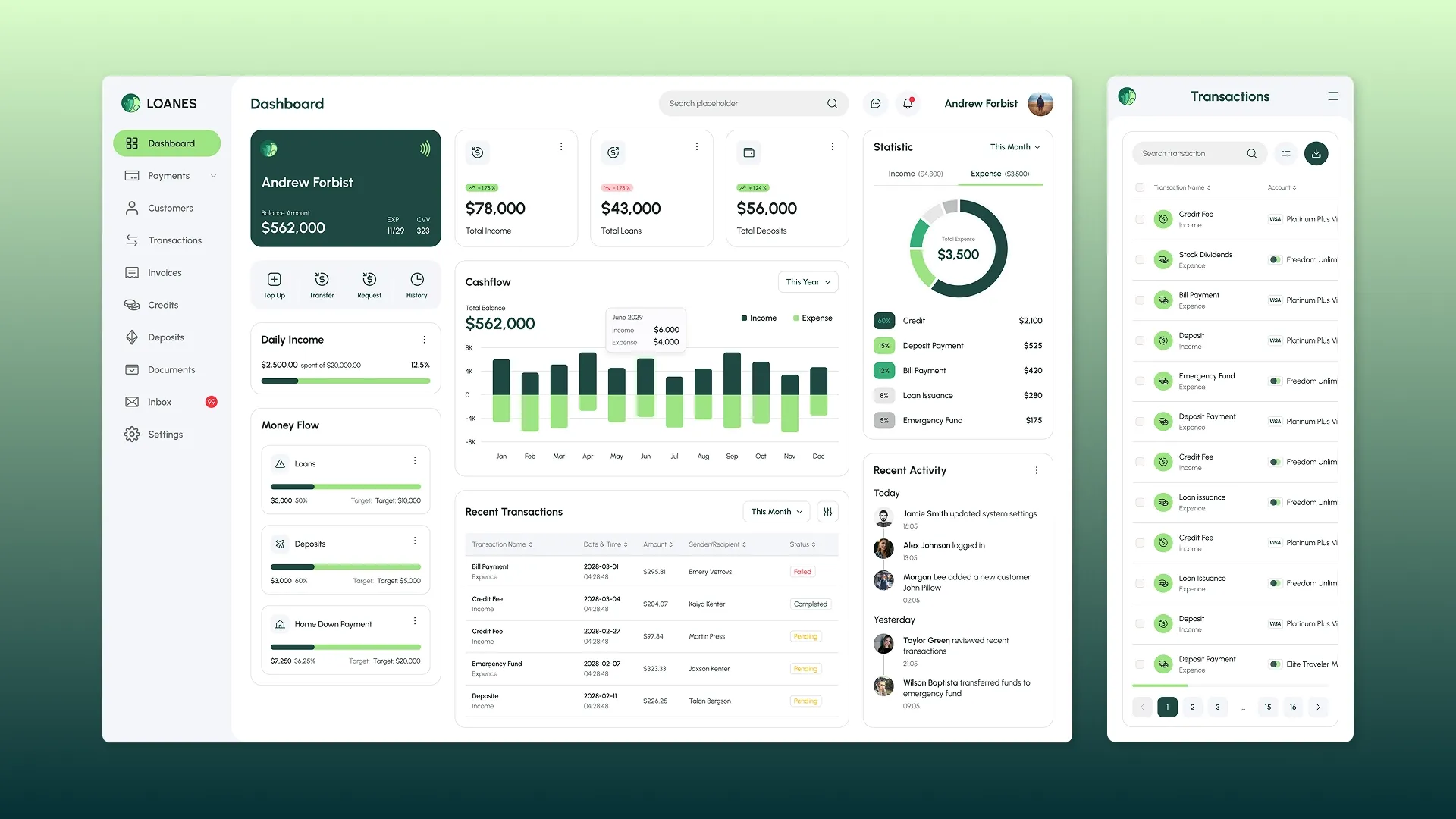
Traffic arbitrage involves analytics, A/B testing, tracking sources, and working with advertising networks and partners. A CRM system for traffic arbitrageurs helps effectively manage budgets and ROI. It integrates all traffic sources, automates lead, cost, and conversion tracking, and integrates with trackers and affiliate networks. Our team implemented a wide range of functionality as part of the CRM development for LeadsJet, a startup in the FinTech traffic arbitrage vertical.
CRM for importing cars from the USA
Monitoring the purchase, delivery, customs clearance, and sale of vehicles from abroad requires clear management. A CRM system for importing cars from the US allows you to track clients, vehicles, payments, and documents, and automates notifications about current delivery stages. A customized program builds customer trust and reduces order processing times.
Our team implemented a similar solution as part of a comprehensive business automation program for a company that buys and delivers cars from US auctions. In addition to the CRM, we also developed a website with an online calculator for shipping and customs clearance costs, and set up effective contextual advertising.
CRM for delivery services
Organizing routes, managing orders, tracking deliveries, and communicating with customers are key processes in the delivery industry. A CRM system for delivery services speeds up order fulfillment and improves service by coordinating all stages, creating optimal routes, tracking statuses, and managing couriers.
CRM for car service
Car service is a business where the accuracy and timeliness of service determine the level of customer trust. A CRM system for a car service allows you to centrally store data about cars, work history, owner contacts, and customer communication. It automates repair bookings, reminders about upcoming maintenance, and schedule management for technicians, which increases work efficiency and customer service.
CRM for a car wash
Effective record and schedule management, payment control, and incentives for repeat visits are essential for car washes. Prompt customer service and transparent record keeping are key. A CRM system for a car wash: it can automate records, keep track of services rendered, and collect analytics on workload, employee efficiency, and average check.
CRM for a car dealership
Car sales are a complex process involving test drives, discussions, large sums of money, and related services. Car dealerships and auto sales companies handle dozens of positions, clients, and partners. A car dealership CRM system allows you to manage the sales funnel, track customer interactions, generate sales proposals, and analyze sales rep performance.
CRM for auto shop
Auto parts retailing requires accurate sourcing, inventory control, dynamic pricing, and fast customer service. To reduce operational burdens, a CRM system for auto parts stores is essential. It helps integrate inventory management, automate orders, monitor deliveries, and ensure prompt inquiries are processed.
Implementation of CRM systems
Business automation isn't just about installing software; it's a comprehensive process transformation tailored to the specifics of the business, its current objectives, organizational structure, and customer expectations. It's crucial to carefully develop scenarios and logic, train the team, and ensure metrics are monitored. At AvadaCRM, we take a comprehensive approach to CRM system implementation, making them a true driver of growth and management.


Do small and medium businesses need CRM systems?
Many people still think that CRM systems are a solution only for large companies with extensive sales and marketing departments. But in reality, smaller companies face the same challenges, albeit with far fewer resources to address them. Even a simple CRM for small businesses can help overcome these challenges.
- Firstly, small businesses are directly dependent on the quality of their customer service. When every customer counts and competitors are keeping you on your toes, CRM allows you to develop a systematic approach to customers even without expanding your staff: recording all interactions, making timely offers, and retaining customers.
- Secondly, small business owners often have to juggle multiple roles: sales, marketing, and administration. CRM solutions for small businesses relieve some of this burden by automating routine processes and simplifying data management.
- Third, commissioning CRM development means investing in sustainable development. Without a system, client data is stored in notebooks, spreadsheets, and instant messaging apps. While this works for a small amount of data, as the business grows, chaos sets in, data gets lost, and deals fall through. CRM, on the other hand, ensures order and transparency in processes from the very beginning, laying the foundation for scaling.
Finally, implementing a CRM for small businesses opens access to tools previously available only to large companies: marketing automation, sales analytics, and funnel management. This allows them to compete on equal terms and grow faster without increasing personnel costs.

What problems and risks may arise when implementing CRM?
Implementing a CRM system is a huge step forward for any business, and it does come with some risks. However, these potential issues pale in comparison to the benefits of automation. By hiring an experienced CRM development team, you can successfully manage these risks and minimize them.
High cost of implementation
Developing a CRM system does require investment, both financial and time-consuming. The main reasons for the high cost are the development of custom functionality, adapting the existing system to the specifics of the business, integration with other services, and the creation of a unique design.
With custom development, costs are optimized through precise functionality, the absence of unnecessary modules, and flexible budget management. You pay only for what your business truly needs, not for unnecessary features.
Difficulties with staff training
Transitioning to a new system always requires employee adaptation, which can lead to a decrease in productivity at the start of implementation. When developing a CRM from scratch, we consider the specific needs of employees and their regular processes, ensuring that interfaces and operational logic are optimally adapted to different user groups. We also provide training and ongoing support, ensuring a smooth, stress-free transition to the new CRM.
Resistance from employees
Any changes to a company's operations can trigger wariness or resistance among staff: employees may fear additional responsibilities, oversight, or increased complexity of work processes. This risk is mitigated by user-friendly interfaces designed with users' real-world needs in mind, as well as by engaging the team in the implementation process. When employees understand the value of the system and see that it simplifies their work rather than complicates it, resistance levels are significantly reduced.
Technical failures and provider dependence
Any digital system can experience technical issues. And we understand that any downtime caused by technical failures is critical for business. That's why we offer custom CRM development services, during which we create a unique, reliable architecture, a scalable infrastructure, and thoroughly test the product. We also provide technical support and updates after launch, reducing the risk of downtime due to software issues. Furthermore, since your software is hosted on an internal server, it is completely independent of third parties.
Long implementation process
Developing and implementing a CRM system for a business truly takes time, especially when it comes to a unique, comprehensive solution. Our specialists build a phased process using flexible development methodologies (Agile, Scrum), allowing for gradual implementation without delays. This approach allows the client to see the first results faster.

Data security and privacy
A business CRM system stores and processes important data: customer databases, transactions, reports, and financial information. Data leakage is one of the most serious risks. Therefore, our custom development utilizes modern data protection protocols, a multi-level access rights system, data encryption, and backup. We always ensure a high level of security and compliance with legal requirements.
All risks are typically associated with poor decision making or poor project implementation. When working with an experienced team developing a CRM specifically for your business, these risks are managed at every stage.
Key criteria for choosing a CRM development company for business:
- deep analysis and detailed development of requirements;
- transparent planning of deadlines and budgets;
- development of user-friendly interfaces taking into account users;
- technical support and staff training;
- advanced data protection system.
Selecting a reliable contractor is key to the successful implementation of a CRM project. With our team, your CRM will become a powerful tool for growth, efficiency, and business control.
Why should you order a CRM system for your business from AvadaCRM?
Our team has been developing CRM solutions for businesses across a wide range of industries for over 10 years – from startups to large manufacturing companies, from retail to hospitality. We know for sure that CRM costs (implementation, development, and support) are an investment in a sustainable future, which is why we create unique software products. Ordering CRM development from us is cost-effective because we:
- We can write CRM from scratch and customize software solutions to meet client requirements;
- We use advanced development stacks and DevOps practices;
- We inform the client about the progress of the project and coordinate each stage;
- We design CRM as a basis for business scaling;
- We implement AI modules, end-to-end analytics, and IoT integrations;
- We provide technical support after implementation: from a basic SLA to full system development within the framework of DevOps support;
- We ensure data protection and compliance with GDPR/ISO standards.


FAQ
-
Does CRM replace ERP system?
A CRM system for your business won't replace an ERP, but it can complement or cover some of its functionality - for example, warehouse, financial, and task management.
-
Is it possible to work in CRM without internet access?
If the system is cloud-based, it will be temporarily unavailable without a network connection, but the data will remain intact. Building CRM systems on an internal server ensures complete autonomy.
-
How to avoid interface clutter in CRM for large businesses?
When developing a CRM system for large businesses, employee roles are taken into account, meaning each user sees only the sections they need. This makes the interface easy to use, avoids distractions, and helps users use the program as efficiently as possible.
-
How much time and investment does it take to create a CRM from scratch?
The time required to develop a CRM system, the cost of the program, and subsequent support after implementation depend on the complexity of the project. A basic turnkey CRM can be ready in 3-4 months, while more complex solutions with integrations and expanded functionality require more time. You can order an MVP - a management system with key features - and gradually develop it.
The cost of a CRM system for a small business and a large company varies due to the different scope of work, the required stack, the specialists involved, and the development time.
-
Is it possible to order a mobile version of CRM?
We develop cross-platform mobile CRM for iOS and Android so you can manage sales, finances, and tasks from anywhere. Accessing your business's CRM via smartphone is also convenient for field employees, couriers, insurance agents, and sales agents.
-
How do I know which features are right for my business?
Before developing a CRM, we conduct a detailed audit of business processes. We analyze which tasks are time-consuming, where errors are likely, and which processes can be automated. Based on this data, we design a CRM that solves real business problems.
-
How difficult is it for employees to learn how to use CRM?
If the CRM is customized to your company's processes, training takes minimal time. Our developers create the interface and logic of the business CRM system to ensure that all users can easily and intuitively navigate the program. We also conduct employee training, providing step-by-step guides, video instructions, and live chat support. This helps your team quickly adapt to the new tool and use the CRM as effectively as possible.
-
Can CRM be used to work with contractors or franchisees?
CRM can be an excellent platform for managing external teams and partners. The program allows you to set access levels, delegate tasks, and track work within a single system.
-
How to evaluate the effectiveness of CRM after implementation?
This depends on the analytics your CRM system provides, such as sales, funnel, task completion, customer metrics, and so on. You'll see where processes have accelerated, where losses have decreased, and how conversion has increased - these are the real metrics of success.
-
Is it possible to manage the production cycle using CRM?
Custom CRM development for a manufacturing business can include the implementation of modules for planning and monitoring production stages, product quality, material accounting, equipment loading, and much more.