









CRM for marketing and advertising
Marketing is the art of influence, where without a clear structure and analytics, even the most brilliant idea will lead to a senseless waste of budget. Modern technologies enable marketers not only to create creative and striking campaigns, but also to make quick data-driven decisions, manage budgets and advertising campaigns in real time, and scale successful strategies. This is why a marketing management system is a must-have for businesses and digital agencies.
AvadaCRM offers custom CRM system development for Marketing and customization of existing solutions. Marketing automation with CRM allows you to reduce time spent on routine processes, optimize advertising budgets, and create effective sales funnels. With us, implementing and scaling an online advertising management system is quick and efficient, tailored to your company's unique business processes.

Goals of CRM development for a marketer
A marketing automation system helps organize the work of digital agencies and internal marketing departments of companies in such a way that:
- Increase advertising effectiveness and conversion rates through real-time data analysis, hypothesis testing, and campaign adjustments based on key performance indicators;
- Synchronize the work of all departments by combining marketing, sales, and service into a single system, ensuring end-to-end analytics and uninterrupted data transfer between departments;
- automate routine processes —such as targeting, audience segmentation, email marketing, and lead processing—allowing marketers to focus on strategy;
- optimize costs by analyzing the profitability of advertising channels and redistributing budgets to the most profitable areas;
- Simplify your reporting system – with a custom CRM, a marketer can gather all analytics in one place, visualize data in dashboards, predict campaign results, and make informed decisions;
- Ensure omnichannel marketing by managing marketing campaigns across multiple channels (social media, email, instant messaging, contextual advertising) within a single interface, while effectively interacting with customers;
- improve service – automate lead management, personalize advertising campaigns, and speed up request processing;
- Scaling your business – a customized marketing program flexibly adapts to growing data volumes, new advertising channels, and market conditions.

Which companies need CRM marketing?
Automated marketing management isn't just something advertising agencies need; CRM is relevant for a wide range of businesses seeking to effectively manage advertising and improve customer interactions.
- Advertising agencies are implementing online marketing software to automate client communications, manage projects and multi-channel campaigns, and collect data for analytics and forecasting.
- Internal departments of large companies use CRM technologies in marketing to optimize advertising budgets, achieve end-to-end analytics, and integrate with various promotion channels.
- For e-commerce companies, CRM for online marketing helps them better engage with their audience, segment them, personalize offers, and automate email marketing.
- For companies in the service sector (healthcare, education, telecom , tourism), an advertising management system provides control over interactions with clients: automation of mailings, management of loyalty programs, analysis of client behavior and needs.
- Financial and insurance companies – a CRM marketing system automates lead generation, increases sales, and creates highly personalized offers for clients.
- Industrial companies use CRM marketing to forecast demand and automate B2B marketing strategies.


What functions can a CRM system perform for marketing?
A custom CRM for marketing goes far beyond basic functionality and encompasses the entire marketing cycle: from campaign planning to results analysis. Let's explore the key features of a customized marketing program that enable marketers to act faster, more accurately, and more effectively.
CRM integration with internal and external services
Custom CRM system development for marketing offers extensive integration options. This minimizes manual effort, eliminates data transfer errors, and significantly accelerates decision-making. A custom marketing management system can be synchronized with existing ERP, accounting, and other company business software to create a unified information space and ensure centralized management of all marketing activities.
- Advertising platforms.
Seamless integration with Google Ads, Facebook Ads, TikTok Ads, Instagram, LinkedIn, and other advertising networks allows you to centrally manage campaigns and gain end-to-end analytics. You can import click, conversion, and cost data in real time, conduct A/B tests, launch campaigns, and manage your budget within a single program.
- Email marketing services.
Integration with Mailchimp, SendPulse, SendGrid, ActiveCampaign, and other services provides effective email marketing management, automatic segmentation, trigger chain customization, and click-through tracking.
- Analytical tools.
Integration of the management system with Google Analytics, Power BI, Tableau, and other platforms allows marketers to obtain data on user behavior and the effectiveness of marketing efforts. This program allows for building reports on custom metrics, such as cost per lead, broken down by geography, gender, and device.
- Social media.
Integration with Facebook, Instagram, Twitter, LinkedIn, and other social networks allows marketers to easily manage posts, monitor mentions, and monitor comments.
- Messengers.
Synchronization with popular instant messengers (Telegram, Viber, WhatsApp) automates communication with clients and enables prompt support.
- IP telephony.
Connecting to an IP telephony system allows you to track customer calls, record conversations, and analyze their effectiveness.

Dashboards and reports
Standard reports aren't suitable for everyone: some focus on ROAS metrics, others on CPL, and still others on LTV and CAC. To make informed decisions and optimize strategies, a customized marketing CRM allows you to create flexible dashboards and reports tailored to specific business objectives:
- display key performance indicators in real time: cost per lead, bounce rate, average application processing time, channel profitability, etc.;
- divide access to analytics by roles: the manager – strategic summary, the targeting specialist – creative effectiveness, the content manager – social media engagement;
- Based on historical data, build models that help predict demand, customer behavior, or the viability of an advertising channel.
Sales Funnel Automation
Marketing isn't just about lead generation; it's about following the customer through from the first click to the repeat purchase. A custom CRM system for advertising and marketing allows you to build automated sales funnels where every step is carefully planned:
- traffic source tracking and dynamic customer segmentation;
- Automatic actions based on triggers: email newsletters, assigning tasks to managers, reminders in messengers, discount offers;
- Integration with chatbots and online consultants to ensure you don't miss a single request.
Flexible settings to suit your business needs
One of the main reasons to order CRM development for marketing and advertising from scratch is the ability to take into account all the specifics of your business and marketing. For example:
- a real estate agency will need integration with property catalogs and automatic generation of ads;
- A SaaS product requires advanced subscription management, trigger notifications, and retention metrics;
- For an online store, CRM requires customized automated funnel scenarios depending on the product category and customer behavior;
- For a marketing agency – customized project management panels, task distribution among designers, copywriters, targeting specialists, and managers; automatic KPI generation for each project; linking advertising campaign results to specific specialists; client invoicing through integration with financial modules; generation of visual reports for clients in one click.


Data-Driven Marketing
Modern marketing is impossible without structured data. Marketing CRM systems can offer powerful analytical functionality that enables the implementation of a data-driven approach:
- collect data from all touchpoints: websites, landing pages, social media, email, offline;
- create a unified knowledge base about the client;
- identify the most effective channels, messages and offers;
- test and scale hypotheses.
Unified Control Center
A marketing CRM system can become not only a data repository but also a central hub for coordinating the entire team's work. This is especially important for agencies and in-house departments where copywriters, designers, targeting specialists, and managers work simultaneously on projects.
With a CRM system, a marketer can:
- automatically set tasks based on certain events, such as receiving a new lead, launching an ad, or needing to update creative;
- use visual boards (Kanban, Gantt charts) for convenient planning;
- conduct discussions, assign responsibilities, and monitor implementation without switching to third-party trackers;
- track deadlines, progress, and employee workload.
Content and creative management
Content is the foundation of most marketing strategies. CRM can manage the entire lifecycle of promotional materials, from defining the objective to analyzing their effectiveness. As part of content management, CRM can perform the following functions:
- centralized storage of banners, texts, and videos with tags, categories, and versioning;
- maintaining a content calendar for planning publications on social networks, blogs, and email newsletters;
- Linking creatives to campaigns with subsequent analysis of clicks, engagement, and conversions.

Budget management and media planning
A marketing CRM system helps track budgets, control expenses, and improve investment efficiency. With a customized program, marketers receive:
- planning costs by channels, projects and time periods;
- automatic calculation of key metrics: CPL, CPA, ROAS, ROI;
- visual dashboards broken down by sources, directions and periods;
- notifications when budget is exceeded or performance indicators decrease.
Personalization of customer experience
Modern marketing is no longer possible without personalization. CRM allows you to tailor every action to a specific client:
- create personalized offers and trigger scenarios based on the client’s behavioral profile;
- send messages (email, instant messengers) based on actions, interests and purchase history;
- Automatically change content on a website or landing page depending on the traffic source, geography, and segment.
Lead generation and affiliate channel management
A CRM can centralize all lead generation channels, including lead capture forms, quizzes, advertising platforms, and affiliate networks.
Functionality includes:
- Automatic import of applications from websites, quizzes, landing pages, messengers, and call centers;
- distribution of leads by sources, regions, and categories of interest;
- Track the performance of affiliate channels and CPA platforms in a single report;
- Automate payments to partners and set up commission calculation rules.

Benefits of a CRM System for Marketing
Automating your advertising agency and marketing department will become a powerful driver of business growth and development. Let's take a closer look at the benefits of CRM for marketers.
Centralized data storage and management
Marketing CRM brings together all customer data, advertising campaigns, analytics, and reports in one place, simplifying decision-making and ensuring process transparency.
Creation of a unified information space
The Marketing CRM system provides access to up-to-date and reliable information, consolidating data from various sources into a single system. Integration with advertising platforms (Google Ads, Facebook Ads, Instagram, TikTok, and email services) allows you to manage all advertising campaigns through a single interface.
Analytics and forecasting
Marketing automation software collects and analyzes data on customer interactions, advertising effectiveness, and behavioral factors, helping to predict future trends and adjust marketing strategies.
Process automation
A CRM for an advertising agency automates routine tasks: audience segmentation, triggered emails, retargeting, advertising budget management, and multi-channel advertising campaigns.
Personalization
A marketing CRM system allows you to track every stage of the customer journey – from initial contact to repeat purchases and recommendations. Using segmentation and AI analytics, the program helps create personalized offers, significantly increasing audience engagement and conversion.
Optimization of advertising budgets
CPM in advertising helps analyze the effectiveness of various channels, allowing you to rationally allocate your budget to profitable strategies.
End-to-end analytics
Receiving data from all advertising channels (contextual advertising, social media, email newsletters, offline advertising), CRM for an internet marketing agency provides a comprehensive analysis of campaign results as a basis for making informed decisions.
Improved service
CRM systems in marketing and advertising help track the complete history of customer interactions, better understand the needs of your audience, promptly process requests, effectively retain customers by creating customized loyalty programs and strengthening relationships.
Scalability and flexibility
Custom CRM development for marketing and advertising allows for adaptation to changes in business processes and marketing strategies, or for scalability.
Data control and security
Marketing automation with CRM provides protection against data leaks and unauthorized access using modern security and privacy technologies.
Stages of developing a marketing program
Analysis and goal setting
Before developing a CRM for a marketing agency or department, analysts study the client's business processes and determine the needs and goals of advertising automation. They also analyze tools for client communication, advertising campaign management, and analytics.
Technical specifications
The technical specifications detail the functional and non-functional requirements for a CRM for marketing and advertising: modules, integrations, visual style, security, and performance.
Design and prototyping
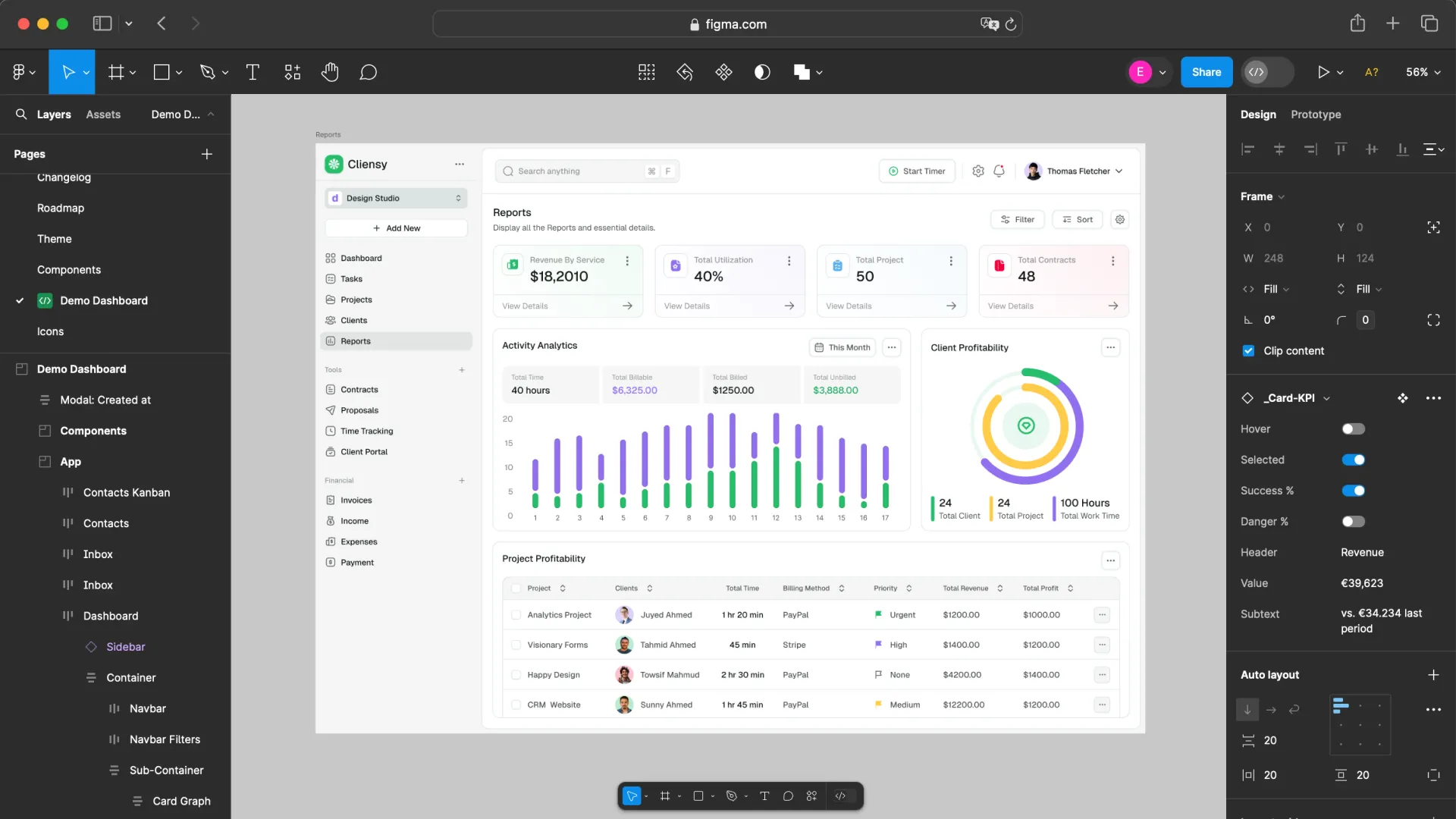
They create the program architecture, design the database structure, and develop interfaces. Using tools like Moqups, Figma, or Adobe XD, they create prototypes to visualize workflows. It's important that the controls are intuitive and accessible.
UX/UI design development
At this stage, designers develop an attractive and user-friendly CPM design for the advertising agency that provides quick access to key functions, matches the company's visual style, and adapts to different screen sizes and devices.
Program development
Programmers create code consisting of frontend and backend components and configure integrations with external platforms. For the frontend, they use React or Vue.js, which allow for the creation of dynamic and easily scalable interfaces. For the backend, they utilize technologies such as Node.js, Python, or PHP, and PostgreSQL or MySQL databases. It's important to create clean code, ensuring high system performance and scalability.
Testing
QA testers comprehensively verify the system's functionality and compliance with customer requirements. They conduct functional, integration, and load testing, as well as usability assessments. Before launch, it's important to ensure that all functions operate stably and correctly.
Release and implementation
Following successful testing, the management system is deployed on the client's server or in cloud storage. This stage ensures a smooth transition to the new software with minimal risks and downtime for existing processes. Employee training is mandatory to ensure effective use of the software.
Project support and development
To quickly address key CRM marketing issues after launch, technical system support, performance monitoring, and the implementation of new features and updates are required. The program grows alongside changing business needs and market conditions.
Why order CRM development for marketing from AvadaCRM?
If you need marketing automation, order a CRM for your digital agency or marketing department from AvadaCRM. You'll receive a customized solution tailored to your business goals, with flexible settings for managing advertising campaigns, leads, and analytics. Our specialists create CRMs for advertising production that help achieve high ROI and integrate with leading advertising platforms. Experienced professionals work on projects, creating reliable, user-friendly, and scalable tools that can adapt to market dynamics and manage budgets efficiently.


FAQ
-
How does a marketing CRM help personalize advertising?
With CRM, advertising works more effectively, as the program analyzes user data, segments the audience, and automatically selects relevant offers.
-
Is it possible to test advertising creatives in CRM?
You can run A/B tests directly in the program if it's integrated with advertising platforms. You can also automatically collect statistics for each test, including CTR, conversions, and cost per lead.
-
Will CRM help launch advertising campaigns faster?
Process automation, campaign templates, built-in calendars, and auto-funnels allow you to launch campaigns 2–3 times faster than with manual management using standard tools.
-
Is CRM suitable for working with UTM tags and tracking their effectiveness?
A customized CRM system can automatically recognize and save UTM tags from each lead, and then generate reports by source, campaign, and keyword.
-
Can CRM be used to track offline advertising performance?
Yes, if you set up unique phone numbers, promo codes, or QR codes for offline sources, the CRM will record requests and link them to offline activities. You'll see real ROI even from outdoor advertising, radio, or TV.
-
Does CRM help manage influencer advertising?
The management system can be used to track results for each blogger: leads, sales, mentions, engagement analysis, and CPL/CPA calculations. The system also conveniently stores contacts, media kits, and interaction history with influencers.
-
Is CRM Suitable for Content Marketing?
A custom management system helps you plan, automate, and analyze the effectiveness of content strategies.
-
How much does it cost to order CRM Marketing?
The cost of development services depends on the functionality, integrations, and complexity of the project. We offer customized solutions that quickly pay for themselves.
-
What are the lead times for CRM development?
Development can take several months – 5 or more, depending on the scope of the tasks, the number of integrations, and the specifics of the business.
-
How does a custom management system differ from ready-made solutions?
Ready-made solutions are universal, but they don't take into account the specifics of your business. Custom systems are tailored to your processes and are highly efficient and flexible.
-
Is it possible to develop a banner advertising management system?
Yes, the program can be adapted for banner management – automatic placement and analysis of their effectiveness.
-
Is it possible to develop a CRM for network marketing?
Yes, marketing software can be used to automate interactions with partners and manage multi-level structures.